
Time slowing down again
You know how life speeds up as you get older. When you’re five, it takes forever to become six. Then, as you age, whole years seem to disappear and you catch yourself saying, where did the year go. Yet I’ve noticed time has slowed again, closer to how it felt when I was a child. I’m sometimes surprised to realise I did something earlier this year, even though it feels like there’s a huge space between then and now.
There’s a theory that time feels slower when we’re young because each year is a much larger percentage of our life. When we’re five, a year is twenty percent of everything we’ve ever known. As we get older, each year becomes a smaller slice of our life, and time seems to speed up.
But time perception is influenced by far more than percentages. When we’re bored, trapped, or unhappy, time can become our enemy — something we watch and wish away. Nelson Mandela, looking back on his 27 years of imprisonment, wrote: “You come face to face with time, and there is nothing more terrifying than to be alone with sheer time.”
But slowness can also come from the freedom of doing less and being absorbed in what we enjoy or find interesting. When we’re not focused on outcomes or achievement, time loosens its grip.
From natural to clock time
Most of us think of time as something that has always been there, at least the way we measure it now in days and hours. We forget that for most of human history, time was experienced through the natural world — sunrise and sunset, the phases of the moon, the changing seasons.
When clocks arrived, they didn’t just tell us the time — they made it possible to be precise about when things would happen. How cool is that? You could actually say, “I’ll meet you at 10.30 for coffee,” instead of, “I’ll meet you when the sun is in a particular position.”
But with this precision has come a whole new way of organising life around the clock. We work from 8.30 to 5. We catch the 7.43 train because we need to be there on time. We eat between 12 and 1 because that’s our lunch hour. Even exercise gets timed — 45 minutes at the gym, whether we feel like it or not.
An adult can spend forty minutes doing something they love and still think, “I really should be getting on with something.” A child can spend forty minutes watching an insect without thinking, “I’ve just wasted forty minutes.” Childhood isn’t simply a period when time moves slowly. It’s a period when we’re relatively free from the adult preoccupation with where we ought to be by a particular time.
Why time speeds up
When time becomes something we measure ourselves against, it speeds up. When time becomes a space we inhabit, it slows. The difference has less to do with age than with how much of our life is organised around the clock.
Adult time speeds up because life gets crowded. Schedules, obligations, and constant stimulation leave little room for simply being in a moment. When our attention is divided, the hours feel shorter because we’re not fully taking them in.
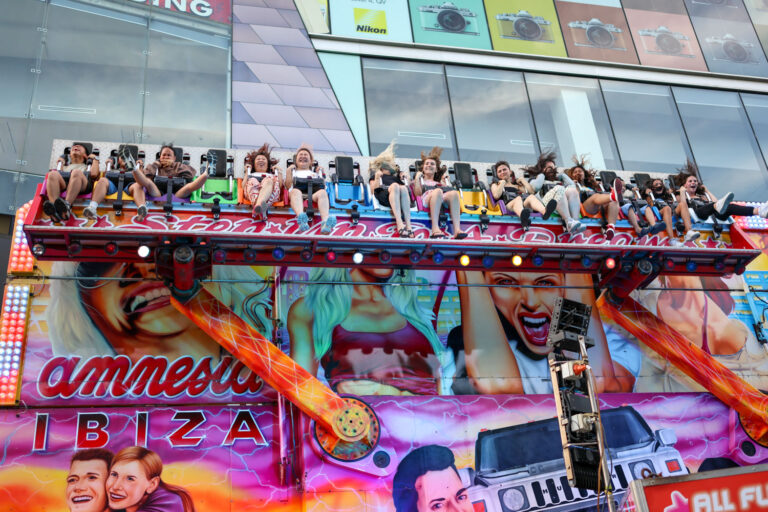
Consumerism pushes this even further — buying more, doing more, working more to pay for it. The more we try to fit in, the faster time feels. A full life isn’t always a life well lived.
Being in constant movement is a state the body absorbs. When life moves too fast, we often sleep less, eat poorly, and drift away from the habits that keep us well. Over time, that pace can wear us down. Becoming slow is self‑care. It’s a way of protecting our future self.
Time doesn’t behave the same way for everyone
Time shifts depending on our circumstances and the stage of life we’re in. It can freeze in grief, race under pressure, and slow in danger. In boredom it stretches; in trauma it fragments; in burnout it collapses into a blur.
Slowness can come from being fully inside what we’re doing. Artists often describe time widening when they’re absorbed in their work. People who spend extended time in nature say the days feel slower and more spacious. Readers, or anyone who gets deeply caught up in something they love, can feel time return to a childhood pace. These forms of slowness come from attention — from being fully inside what we’re doing.
Retirement doesn’t guarantee slowness. It changes what people’s days are built around, but time can still race when stress or grief is weighing on someone. It can drag when life feels dull or disconnected. And it can feel spacious when people try new things, pay close attention, or settle into a pace that suits them.
Slowing down and paying attention

When people look back at their lives, their biggest regrets are because of pace. They regret working too hard, rushing through years, neglecting friendships, not walking the dog as often as they meant to, and not taking care of their health sooner. They regret the things they didn’t do, the risks they didn’t take, the moments they moved too fast to notice.
Near the end of life, people talk about wishing they had lived more intentionally, more honestly, and at a pace that matched their values. Almost no one regrets slowing down. They regret living too fast and spending time on things that don’t matter.
Time isn’t neutral. It’s formed by what life demands and what we allow. Our circumstances influence how we experience time, and that experience isn’t fixed. Even noticing how time feels is a kind of agency. What we consume affects how fast time feels, how overwhelmed we become, and how much room we have to act.
Attention is a political resource. In a culture built on consumption and productivity, choosing to slow down is one of the few forms of resistance that sits within our control. It’s a way of reclaiming how we want to live.