
It is no sign of good health to be well adjusted to a profoundly sick society.
Life: Daily Meditations with Krishnamurti (HarperCollins, 1995)
I already knew a little about Krishnamurti’s intriguing life, having come across the quote above years ago, which stayed with me. My interest in him was piqued again recently after watching a series of discussions between Krishnamurti and David Bohm, who through very different means came to agree on many things.
Krishnamurti (1895–1986) was a philosopher who believed he spoke from direct contact with “the source.” Bohm (1917–1992), a physicist, came to see striking parallels between his own discoveries and Krishnamurti’s teachings. While Krishnamurti was revered by many, Bohm’s ideas on consciousness were largely unwelcome in the scientifc community, as his physics pushed past the limits of a measurable universe. Yet he was respected by a few major figures, including Einstein, who called him his spiritual son.
A Shared View of Reality
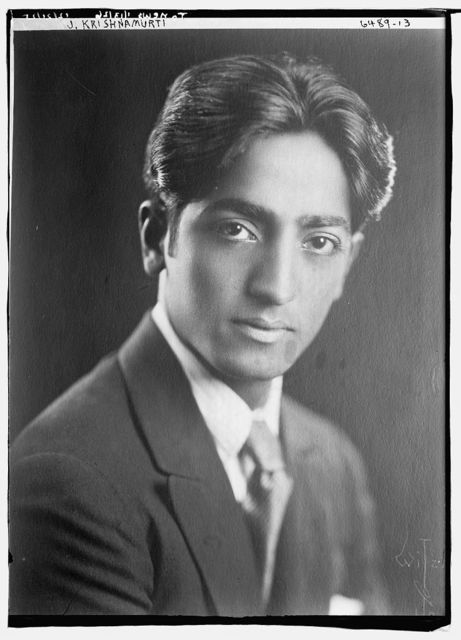
Counter to the traditional scientific quest to fully explain the nature of reality, Krishnamurti and Bohm believed such understanding can never be complete. For them, the universe is an interconnected creative force—continually unfolding, limitless, and ultimately unknowable. Yet they belived that we can move closer to truth through sustained openness and a willingness to question the unknown.
For Krishnamurti, understanding arose from quieting the mind enough to touch what he called universal intelligence. But to reach this source, something within us rather than separate, we need to strip away our conditioning. This includes dogmas learnt from the likes of organised religion and spiritual figures, himself included.
He also taught that we should meet each new moment with full awareness, and that holding on to or analysing the past has little bearing on what we can become now. When biographers asked about being proclaimed the next World Teacher at fourteen—a prophecy he publicly rejected at thirty‑four—he would briefly wonder whether it had been fate, chance, or even a true prophecy. Then he’d stop himself and say it was best left alone.
Theosophical Beginnings
In 1909, Charles Webster Leadbeater, a clairvoyant and prominent member of the Theosophical Society, came across Jiddu Krishnamurti as he bathed with his younger brother Nitya and a few other children in the ocean in the small Indian town of Adyar. Leadbeater was struck by the boy’s aura, which he believed showed complete selflessness. Krishnamurti was soon declared the next “World Teacher,” a spiritual figure the Theosophists had long been anticipating.
After talks with Krishnamurti’s father—who had been struggling to care for his six children after his wife’s death—the Theosophical Society adopted Krishnamurti and his younger brother Nitya, who he was very close to. Their days became highly regimented, structured around education, etiquette, yoga, meditation, and theosophical instruction.
Particular attention was given to Krishnamurti’s physical health, as the Society believed his body would one day serve as a vehicle for Lord Maitreya—traditionally seen in Buddhism as the future Buddha. The Theosophists repurposed Lord Maitreya as an advanced spiritual being who would guide humanity by channelling through a chosen human.
The Process and its Consequences
Much of this prophecy seemed to be coming true. At twenty‑seven, while living with his brother in Ojai, California, Krishnamurti began having episodes that could last for days, during which he appeared unconscious. When he returned, he described intense physical sensations—some blissful, some painful—and out‑of‑body states in which he felt the vastness, sacredness, and unity of everything. Over time he also spoke of moments in which he dissolved and merged with the Spiritual Masters, including Lord Maitreya. These recurring episodes came to be known as “the process.”
Three years after “the process” began, when Krishnamurti was thirty, his brother died. Nitya had been critically ill with tuberculosis and had remained in California rather than travel with Krishnamurti on Theosophical business, as he usually did. Krishnamurti had agonised over whether to leave him. But after Leadbeater and other senior Theosophists assured him that the Masters considered Nitya too vital to his future mission to die, he chose to go.
The news of his brother’s death devastated him. We don’t know the depth of soul‑searching that must have followed. However, private letters show doubts he kept carefully hidden from the Theosophical Society.
Truth is a Pathless Land
Four years later, Krishnamurti stood before a crowd of around 3,000, with many more listening by radio, and announced that he was severing all ties with the Theosophical Society and no longer wished to be known as the “World Teacher.” His declaration came as a complete shock. It was during this address that he delivered his now famous statement that truth is a pathless land.
This became one of Krishnamurti’s enduring messages. A path is built on fixed ideas —religious, political, or ideological—that lead to conformity rather than insight. Truth, by contrast, is dynamic and can only be discovered through direct, quiet observation of the self. For this reason, he urged people to reject all external authority and question everything for themselves. And that is precisely what I am about to do.

Life After the Theosophical Society
After leaving the Theosophical Society, Krishnamurti became an independent speaker. A gradually increasing circle of loyal supporters eventually established the Krishnamurti Foundations. Bohm later became part of this organisation, which preserved and supported Krishnamurti’s teachings and managed his schools and study centres.
Mary Zimbalist, his personal assistant and companion from his late sixties until his death, describes his day‑to‑day life. When he gave public talks around the world, some attended by many thousands, he’d sometimes remark as they drove him to the venue, I have no idea what I’m going to say. Then he’d walk on stage and deliver a talk that left people spellbound by his presence and words.
In between working, Krishnamurti spent a great deal of time in leisure. He had a morning yoga routine, loved walking in nature and rested often. His favourite books and films were thrillers and detective stories, and his favourite TV show was Kojak, the light‑hearted crime series. Because of recurring illnesses—including malaria and ongoing problems with his teeth, both likely linked to the poverty of his childhood—he sometimes had to cancel talks and travel.
Both biographers describe how, right up until his death, Krishnamurti continued to experience profound states of bliss and a deep sense of oneness with everything. They recount occasions when they themselves felt drawn into this atmosphere. They also note that he now rejected the idea that he had ever been in contact with the spiritual master Lord Maitreya, a belief instilled in him during his years under the care of the Theosophical Society when these experiences first began.
Occasionally he would lay his hands on people close to him who had fallen ill, who would then be “healed” or noticeably improved. He didn’t speak publicly about this, or about his earlier psychic experiences, because he didn’t want to be seen as a healer or as someone mystical.
I particularly enjoyed a story Krishnamurti once told while having supper with a small group. A pupil spent fifteen years studying with a guru, felt he hadn’t attained anything. So he left, and then spent another fifteen years studying elsewhere. When he finally returned, he announced that he had attained something marvellous and could walk on water. The guru asked him to show him, watched, and then said, “You took fifteen years to do that? If you had told me, I could have shown you there is a ferry.” (from In the Presence of Krishnamurti: Mary’s Unfinished Book, by Mary Zimbalist and Scott H. Forbes)
The Person Behind the Teachings
But what struck me, after reading memoirs, writings, and speeches, is that he did not always apply his wisdom to the messy business of living. His main biographers, Mary Lutyens and Mary Zimbalist—both deeply loyal to him—tended to present a saintly figure. On reading more widely a far more complicated picture emerged. In some ways, his teachings became the very thing he spoke out against: a dogma he imposed on himself and on others.
Krishnamurti cared deeply about the state of humanity, and the wellbeing of nature and animals. However, on watching his talks, I’ve had mixed experiences. Some felt clear and profound. While others were hard to follow and seemed lofty, bringing to mind the story of The Emperor’s Clothes. My inability to understand would likely have irritated Krishnamurti. He was often frustrated when people failed to fully understand him or undergo the inner transformation he spoke of.
Bohm’s biography traces the period when he felt a profound connection with Krishnamurti and joined him in public dialogues. Over time, he became increasingly aware of the gap between Krishnamurti’s teachings and aspects of his personal life, and learned to separate the message from the man. When Bohm later struggled with his mental health, Krishnamurti withdrew from the relationship. This hurt Bohm deeply and contributed to his further decline.
Krishnamurti believed that seeking psychological help meant submitting to an authority outside oneself. A principle he applied rigidly to his own life. Ironically, this stance becomes more understandable when you look closely at Krishnamurti’s childhood and the years he spent under the control of the Theosophical Society.
The Patterns That Shaped Him
Krishnamurti’s mother—who had given birth to eleven children, only six of whom survived—died when he was ten. Those who knew him as a boy said he was singled out by his schoolteacher and caned almost daily because he was slow, dreamy, and inattentive. They also spoke of his psychic experiences, including seeing his deceased mother and sister. Later in life, Krishnamurti deliberately shut these experiences down. He said they interfered with the search for truth, and that reading another person’s thoughts would be like reading their private letters without consent.
The Theosophists stressed that although Krishnamurti later became strikingly physically beautiful, this wasn’t the case when Leadbeater discovered him at fourteen. At that time he was undernourished, lice‑ridden, had crooked teeth, and was described as having a dim‑witted expression. Given that Leadbeater was known for surrounding himself with good‑looking boys and later resigned from the Society after accusations of pederasty, it makes sense that they would emphasise this.
Krishnamurti couldn’t recall any sexual misconduct. In fact, he remembered very little about his childhood and youth. But the few events he did remember, along with accounts from others, show that Leadbeater repeatedly overstepped personal and physical boundaries. Krishnamurti described an incident when he was standing at a window looking out with his mouth open. Leadbeater came up behind him and snapped it shut in irritation. Yet even after breaking with the Theosophical Society, he continued for some time to write affectionate letters to Leadbeater and to others who had treated him severely, and who had tightly controlled his day to day life.
Conflict and Secrecy
Both biographers spend considerable time describing the long‑running personal conflict and legal disputes with Rajagopal that continued up to Krishnamurti’s death. After breaking with the Theosophical Society, Krishnamurti lived with Rajagopal and his wife Rosalind on and off for about a decade. Rajagopal—once a trusted friend—was appointed as the overseer of his travels and publications.
The biographers struggled to understand the harshness and bitterness the couple directed toward him. Krishnamurti told Mary Zimbalist of occasions when Rosalind was abusive. On one occasion she kicked him in the groin, and on another told him he should jump under a train.
Reading these accounts left me with many nagging questions, some of which were answered by Radha Sloss’s book. Published five years after Krishnamurti’s death, it revealed the twenty‑five‑year relationship between Krishnamurti and her mother, Rosalind.
When I first learned of his affair, I almost abandoned the whole project. How can we learn from someone who kept such a secret from those closest to him? (Though as the legal battles intensified his senior figures eventually found out and chose to keep it hidden to protect his public image). Yet I stayed with it, because his life reflects something I’ve come to believe. Having a connection to the spiritual is only one form of intelligence. However, living ‘well’ also involves learning the relational and practical skills of daily life.
When Mary Zimbalist asked him why he hadn’t turned away from the couple, his reply was simply, “I don’t know.” I think I have some idea. Growing up inside a tightly controlled environment under the care of the Theosophical Society. Most of his relationships were shaped by power imbalances in which he had little or no say. He never learned to set boundaries or recognise when a relationship had become harmful. In that light, it’s remarkable that he was able to break away from the Theosophical system as completely as he did. But leaving a system is not the same as unlearning the patterns it created.
Krishnamurti believed that we can all undergo immediate and total transformation. While this approach might work for a monk who spends a lifetime in meditation, it left him without the tools needed to build emotional intelligence. His belief that looking into the past was futile meant he avoided reflection and support that could have helped him understand his own patterns.
Although his biographers saw his distance from the past as evidence of detachment and presence, I wonder if it was something closer to dissociation. A way of keeping painful memories at bay. Today, with our greater understanding of trauma, his fainting spells, recurring illnesses and pain could be interpreted as his body expressing what his mind couldn’t bear to face. And what we push away often returns as fear.
Fear was one of Krishnamurti’s key themes, and how it blinds us to what is true. Yet fear seems to have been a major force in his own life. I suspect this is what kept him from telling those close to him about his relationship with Rosalind. Fear of being abandoned or displaced as the figure they saw as a guru, despite his rejection of that role. He was also frightened of dark forces and of the dark itself. And he increasingly worried that Mary Zimbalist would die before him. He died on morphine to ease the pain of pancreatic cancer, with Mary by his side.
Legacy
So, what do I make of Krishnamurti’s story, other than that he lived an intriguing life? Here’s where I’ve landed. Many people have expansive spiritual experiences — moments that can’t be explained or that feel like touching something beyond the physical — and these take many forms. Some use them to steady and deepen their lives. While others become unbalanced, believing that this is the only path to self‑realisation. Krishnamurti’s ability to enter profound inward states emerged early and was strengthened by his years with the Theosophical Society, yet he overlooked other aspects of growth that shape a well‑rounded life.
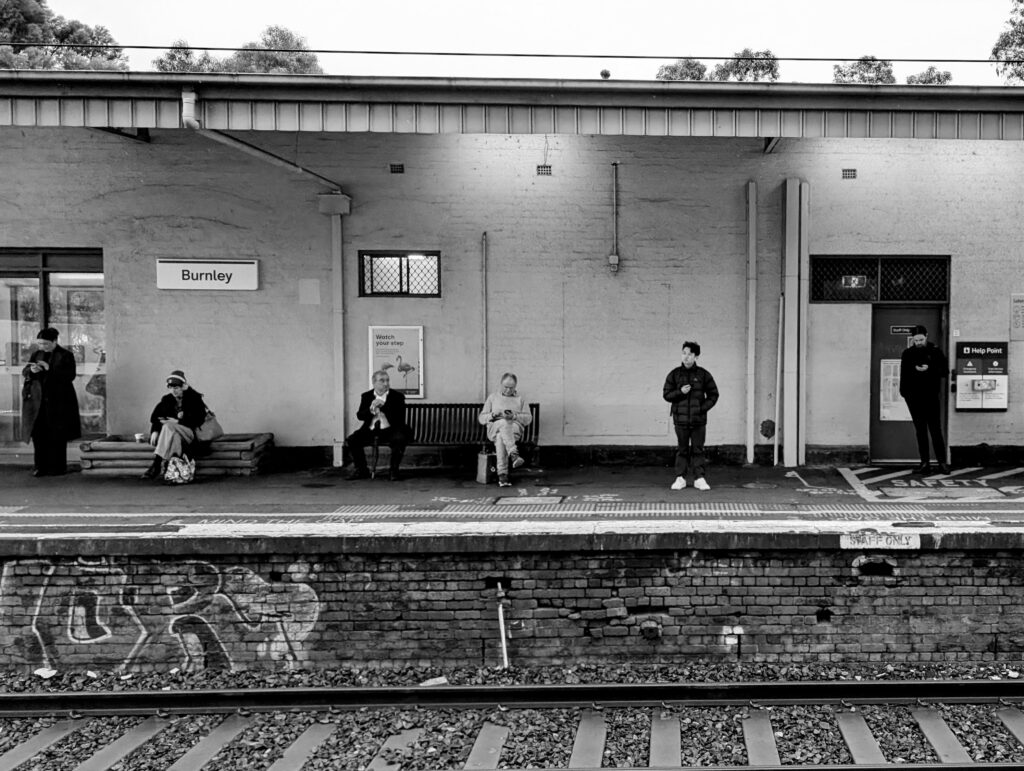
Yet for all Krishnamurti’s struggles, he left a real gift: the courage to share a way of looking at life that invites us to examine our conditioning and meet the world with a quieter, more attentive mind. Some of his philosophies feel more relevant now than ever as our world is increasingly fractured by nationalism, religion, and rigid ideologies that fuel conflict and war. And many of us are pulled into a constant state of distraction by technology, using our phones for inner inquiry rather than stillness.
I tend to agree with Krishnamurti’s view of the nature of things. God isn’t a fixed, person‑like presence but a force — movement, light — something alive rather than something that can be defined. And this force isn’t concerned with religion, nationality, or whether you believe in anything at all.